

Welcome to the National Consortium for Excellence in Primary-Secondary School Transitions
A consortium which unites researchers, educators, local authority leads, policymakers, and third-sector partners to improve primary-secondary school transitions outcomes for every one of the 750,000 children who move up each year.

Significance of primary-secondary school transitions
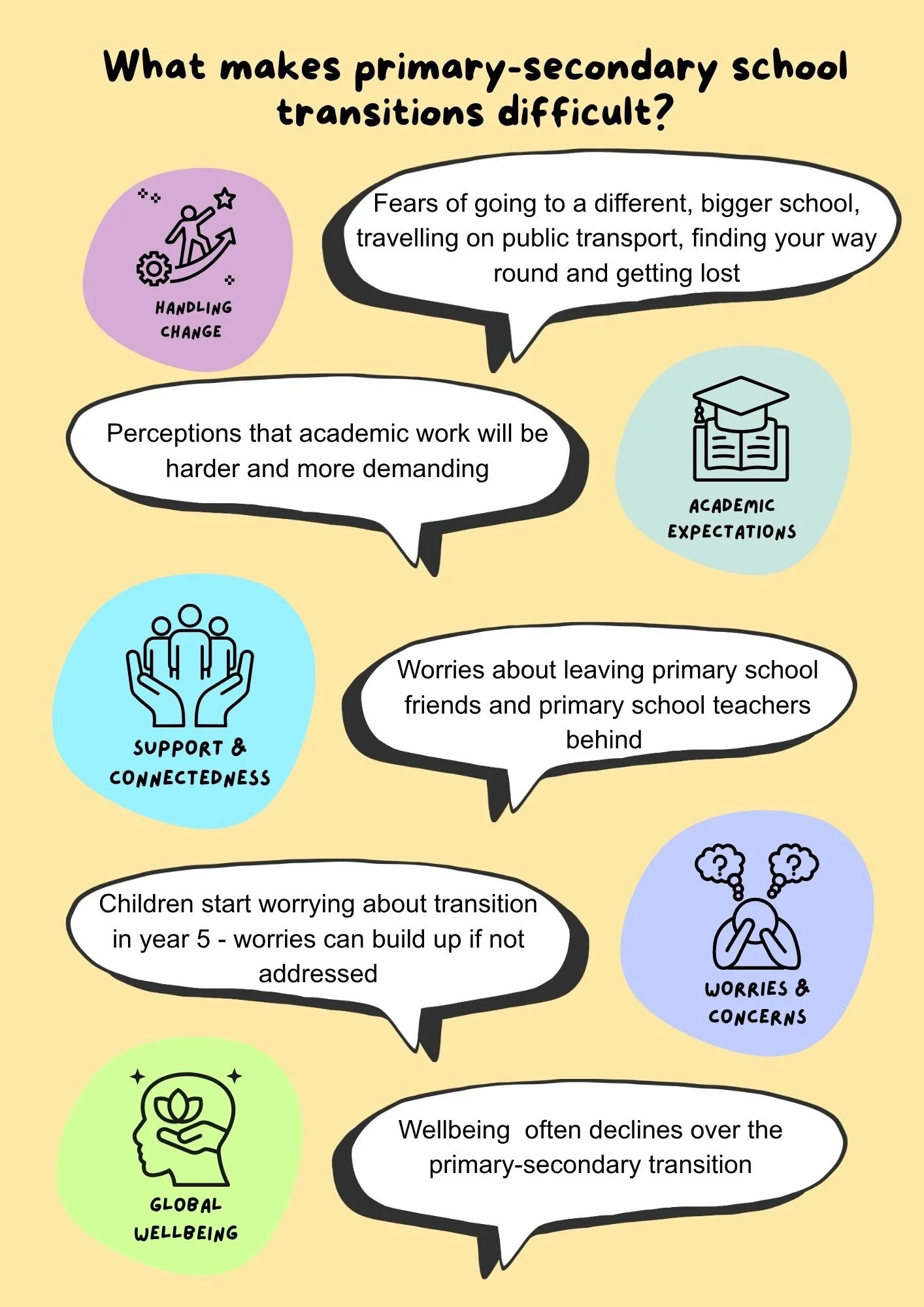
Why are primary-secondary school transitions so important, and what are the key challenges we need to address?
Primary-secondary school transitions, which most children navigate at age 11 in the UK, mark a critical period in a child's educational and emotional development. While many children feel optimistic about the opportunities secondary school will bring, this period is often accompanied by stress, anxiety and declines in emotional wellbeing. Over the past decade, Government reports in England have consistently identified primary–secondary transitions as poorly managed and a systemic weakness (DfE, 2025), and the Department for Education have reiterated that ‘a greater focus on transition periods in children and young people’s lives is needed’ (DfH & DfE, 2018, p.13), with many children believed to be ‘lost in transition’ (Children’s Commissioner, 2024, p. 96). Urgent, systemic, and evidence-informed action is needed, supported by the development and dissemination of best-practice guidance drawing on research, policy and practice.
Poor experiences of primary-secondary school transitions are associated with low educational attainment, attendance and mental health at age 15 (Donaldson et al., 2025; Bagnall et al., 2025)
Two-thirds of children report stress and anxiety about transition up to two years before starting secondary school (Bagnal et al., 2024)
A lack of a clear and consistent policy framework which sets out statutory requirements and guidance documents – without this, there is a risk of changes to learning and academic expectations, relational disruption, and environmental and identity changes during the process, which can be difficult to manage.
Variation in quality, practice and implementation of transition support between schools and local authorities, which can result in under-resourcing and a lack of clarity for educational practitioners about what to prioritise, how and when (Bagnall et al., 2025)
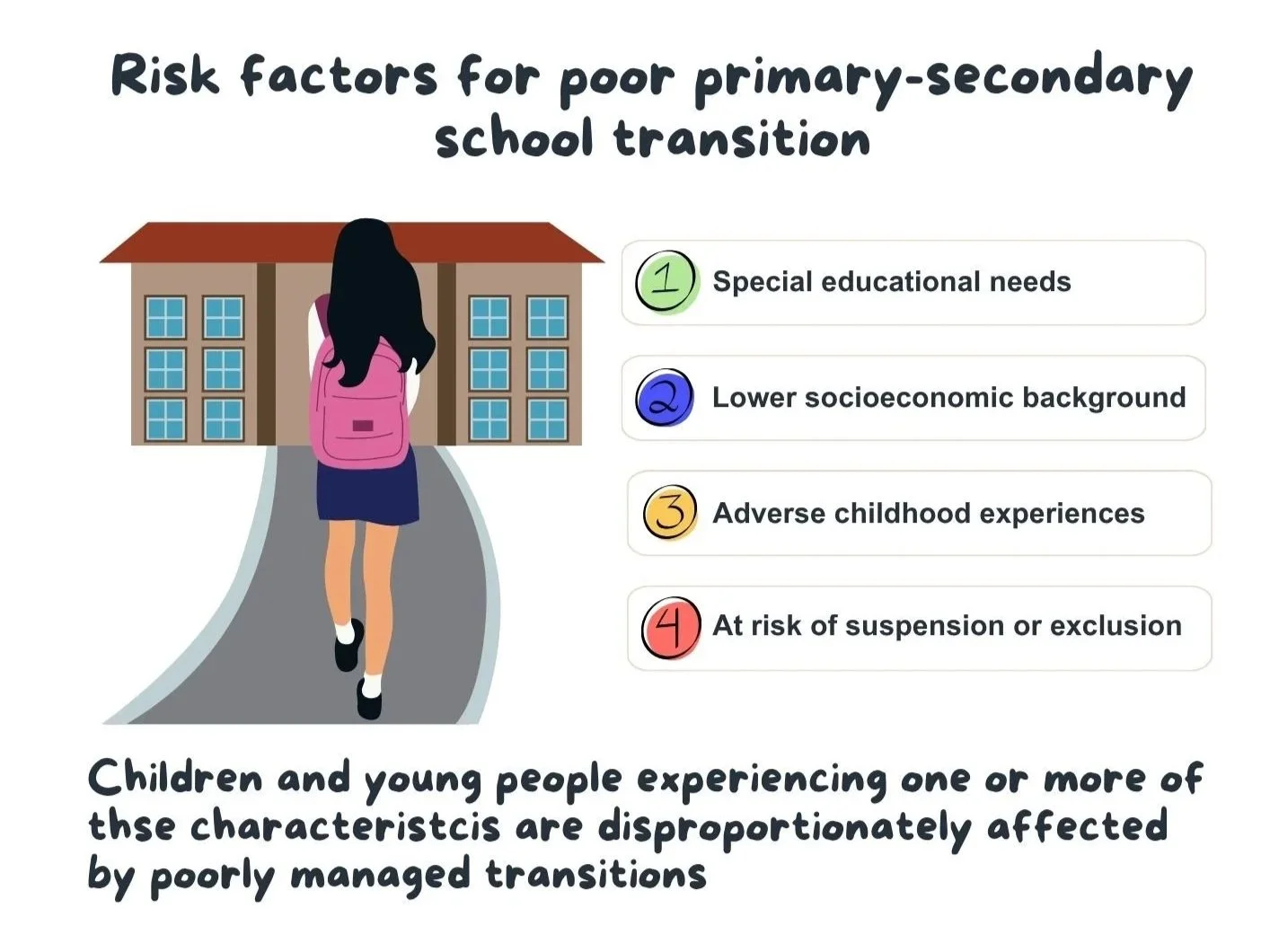
Inequalities exist in primary-secondary school transition experience, with certain groups disproportionately affected by poorly managed transition.
From a public health perspective, primary-secondary school transitions present a critical entrance point for timely and appropriate universal and targeted emotional wellbeing support.

National Primary-Secondary School Transitions Strategy
In practice, the multiple and disparate challenges that primary-secondary school transitions present can be difficult, especially without clear and consistent statutory guidance. A systemic, evidence-informed approach to primary–secondary school transitions is urgently needed, supported by the development and dissemination of best-practice guidance, drawing on research, policy, and practice. To address this gap, we co-developed an evidence-based framework with key recommendations to inform a primary-secondary school transitions strategy in England, drawing on the multi-disciplinary perspectives of 75 experts leading on primary-secondary school transitions provision within educational practice, research and policy, nationwide.
Our response…
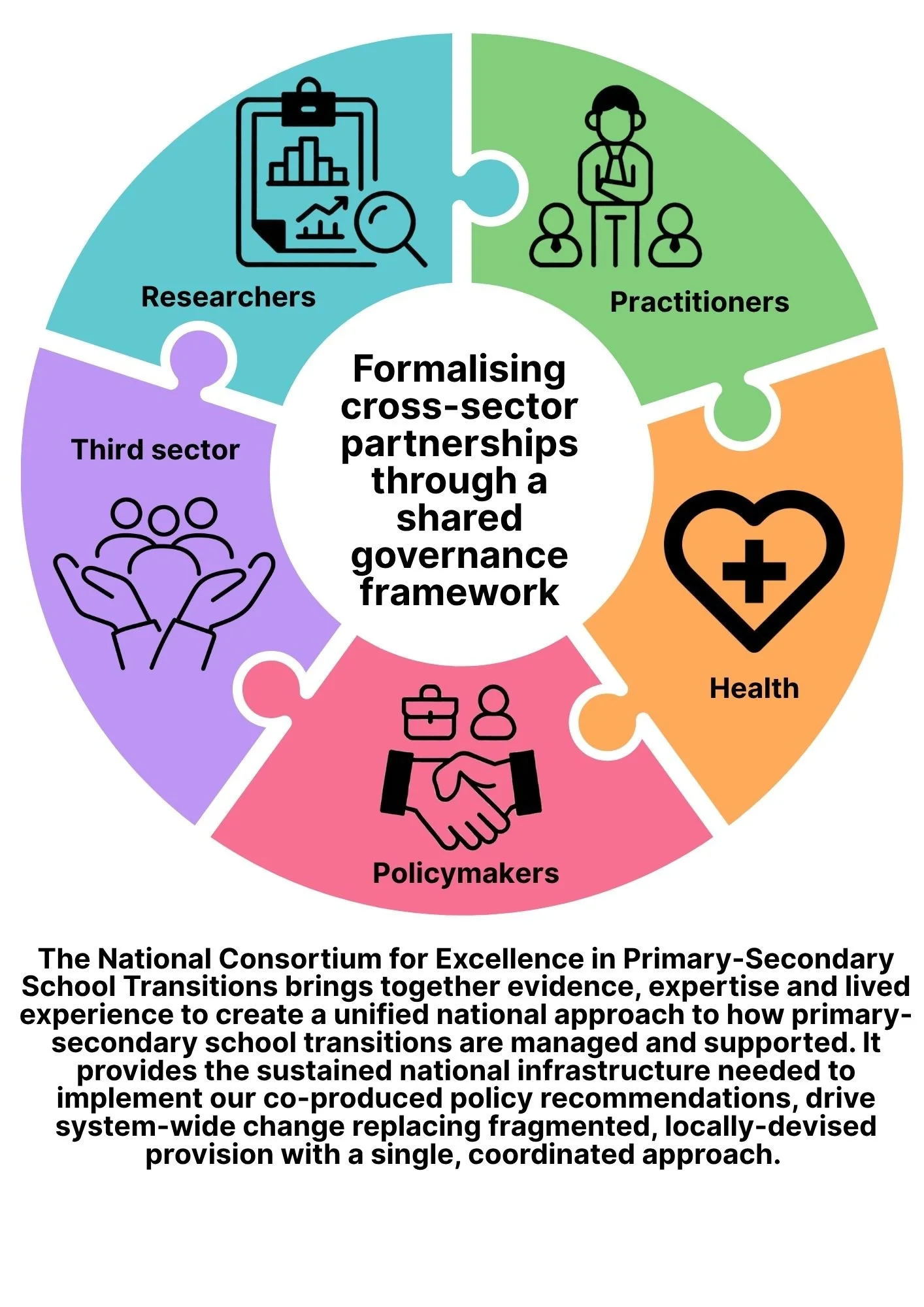
The National Consortium for Excellence in Primary-Secondary School Transitions was established to build on our National Strategy, bringing together evidence, expertise and lived experience to create a unified national approach to how primary-secondary school transitions are managed and supported. It provides the sustained national infrastructure needed to implement our co-produced policy recommendations, drive system-wide change, and formalise cross-sector partnerships through a shared governance framework to replace fragmented, locally-devised provision with a single, coordinated approach.